
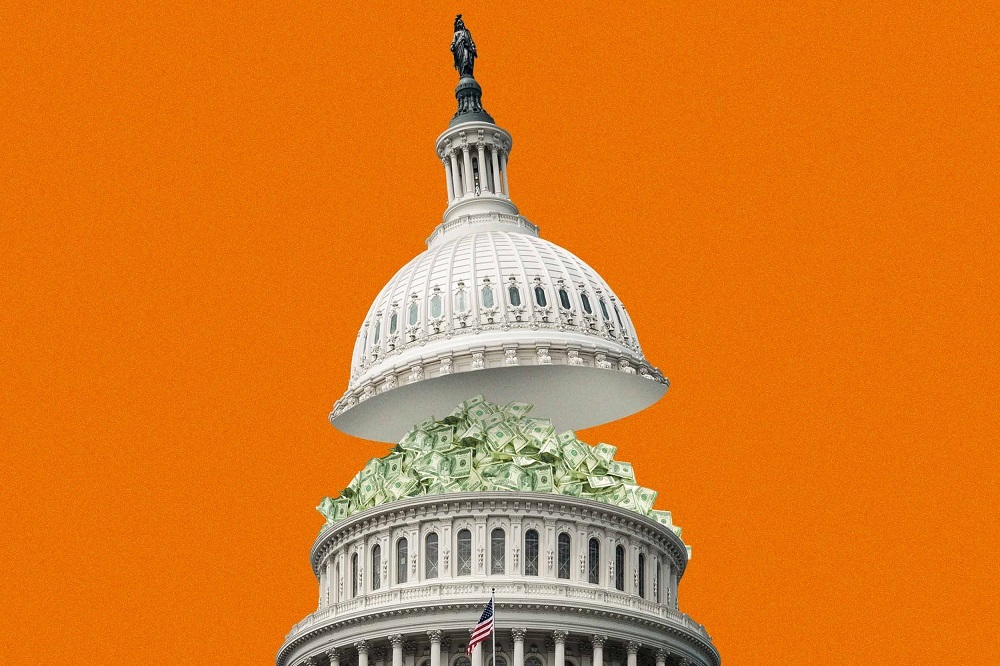

The recurring drama surrounding the United States debt ceiling is often presented to the public as a looming financial catastrophe, a moment where the nation might suddenly run out of money like a household overspending its budget. However, a deeper analysis of the mechanisms involved reveals a different reality. The debt ceiling is not a reflection of a sudden lack of assets or economic productivity; it is a self-imposed legislative constraint. In essence, the debt ceiling debate is a political crisis engineered by the governing structure, rather than a natural financial one born of economic failure.
To understand why this distinction matters, one must first recognize what the debt ceiling actually represents. It is a limit set by Congress on how much the Treasury Department can borrow to pay for expenses that Congress has already authorized. This is the central paradox: the same body that votes to spend the money also holds the power to prevent the Treasury from borrowing the funds necessary to cover that spending. This disconnect creates a recurring stage for political theater that has little to do with fiscal solvency and everything to do with legislative leverage.
The Mechanical Reality of the Debt Ceiling
When the United States reaches its debt limit, the Treasury Department cannot issue new debt. It is forced to rely on “extraordinary measures,” which are essentially accounting maneuvers to keep the government functioning without crossing the legal borrowing threshold. These measures usually involve suspending investments in government employee retirement funds or other internal accounts to free up cash.
The existence of the debt ceiling is unique among modern economies. Most nations do not have a separate vote for borrowing authority; instead, the authorization to spend money inherently includes the authority to finance that spending. In the United States, the separation of these two powers serves as a bottleneck that can be exploited for partisan gain. Because the consequences of a potential default are so severe—ranging from missed Social Security payments to a global credit freeze—the debt ceiling becomes a high-stakes bargaining chip.
The Illusion of Household Budgeting
A common rhetorical device used during these debates is the comparison of the federal government to a family sitting around a kitchen table. Politicians often claim that if a family spends more than it earns, it eventually hits a limit and must stop. While this analogy is intuitive, it is fundamentally flawed when applied to a sovereign nation that issues its own currency.
The United States government operates on a scale and with a set of tools unavailable to any private citizen or corporation. The U.S. dollar is the global reserve currency, and U.S. Treasury bonds are considered the safest assets in the world. The nation’s capacity to service its debt is backed by its power to tax a massive, diverse economy and its ability to manage the money supply. Therefore, a “crisis” only occurs when the political system refuses to honor its obligations, not because the economy lacks the resources to pay.
Political Leverage and Partisan Warfare
The reason the debt ceiling debate recurs with such regularity is that it provides a rare moment of extreme leverage for the minority party in Congress or for factions within the majority. Because a default is unthinkable, those who hold the power to raise the ceiling can demand concessions that they could not achieve through the normal legislative process.
Historically, these concessions often involve spending cuts, changes to entitlement programs, or the repeal of specific pieces of legislation. This transform the debt ceiling from a fiscal tool into a weapon of political coercion. The crisis is not about whether the United States can afford its bills; it is about which political party can force the other to blink first in a game of fiscal chicken.
The Cost of Political Brinkmanship
Even if the debt ceiling is ultimately raised before a default occurs, the mere act of debating it has real-world economic costs. In 2011, a prolonged standoff led to the first-ever downgrade of the U.S. credit rating by Standard and Poors. This move signaled to the world that while the U.S. economy was strong, its political system was becoming unreliable.
-
Increased Borrowing Costs: Uncertainty leads to higher interest rates on government bonds, which paradoxically increases the national debt that the debate was supposedly meant to address.
-
Market Volatility: Global stock markets often react sharply to the threat of a U.S. default, wiping out billions in retirement savings and investment capital.
-
Erosion of Trust: The recurring nature of this crisis undermines the “full faith and credit” of the United States, encouraging other nations to look for alternatives to the dollar.
The Structural Flaws of the 1917 Act
The legal origin of the debt ceiling is the Second Liberty Bond Act of 1917. Before this, Congress had to approve each individual issuance of debt. To provide more flexibility during World War I, Congress established a total limit on debt, allowing the Treasury to borrow as needed as long as the total stayed under that cap.
While this was intended to make the government more efficient, it has evolved into a structural flaw. In the modern era of intense polarization, what was once a routine administrative task has been weaponized. If the debt ceiling were truly about fiscal responsibility, it would be tied to the budgeting process itself. Instead, it remains a separate, redundant hurdle that serves no economic purpose other than to provide a venue for political conflict.
Separating Debt from Deficits
Much of the public confusion regarding the debt ceiling stems from the conflation of the debt and the deficit. A deficit is the difference between what the government takes in through taxes and what it spends in a single year. The national debt is the accumulation of those deficits over time.
Raising the debt ceiling does not authorize new spending; it simply allows the government to pay for things it has already bought. For example, when Congress passes a military budget or an infrastructure bill, the “spending” has already occurred. Refusing to raise the debt ceiling after the fact is akin to ordering a meal at a restaurant and then refusing to pay the bill after the food has been consumed. It is a matter of honoring commitments, not deciding whether to make them.
The Role of the Treasury and the Federal Reserve
During a debt ceiling crisis, the Treasury and the Federal Reserve are placed in an impossible position. They must manage the nation’s cash flow with surgical precision to avoid a technical default. There have been discussions about “prioritization,” where the Treasury would choose to pay interest on bonds and Social Security benefits while withholding pay for government workers or contractors.
However, many economists and legal scholars argue that prioritization is both practically impossible and constitutionally questionable. The systems that process government payments are not designed to pick and choose which obligations to meet. Furthermore, the 14th Amendment of the Constitution states that “the validity of the public debt of the United States… shall not be questioned.” This has led some to argue that the debt ceiling itself may be unconstitutional, as it allows for the possibility of questioning the nation’s debt.
Potential Solutions and Path Forward
To move past this cycle of manufactured crises, several solutions have been proposed. One is the total abolition of the debt ceiling, which would bring the U.S. in line with almost every other developed nation. Another is the “Gephardt Rule,” which automatically raises the debt limit whenever a budget is passed.
Until such a structural change occurs, the debt ceiling will remain a political theater. It serves as a reminder that the greatest threat to the stability of the U.S. financial system is not a lack of wealth or productivity, but a lack of political consensus and the willingness to use the global economy as a bargaining chip in partisan disputes.
Frequently Asked Questions
What happens on the actual day the debt ceiling is reached?
On the day the limit is reached, the Treasury cannot borrow any more money. However, the government does not immediately shut down. The Treasury uses “extraordinary measures” and incoming tax revenue to pay bills for as long as possible. The real danger occurs at the “X-date,” when the cash on hand and these measures are fully exhausted.
Does the debt ceiling help control government spending?
Evidence suggests it does not. Since the debt ceiling was established, the national debt has continued to grow regardless of how many times the limit has been debated. Spending is determined by appropriations bills and tax policy; the debt ceiling is merely a reactive measure that deals with the consequences of those previous decisions.
Why dont other countries have a debt ceiling?
Most countries view the authorization of spending as an implicit authorization to borrow. They recognize that failing to pay for authorized spending would damage their credit and economy. The U.S. system is a historical anomaly that has survived primarily because it offers a unique tool for political leverage.
Can the President raise the debt ceiling without Congress?
There is a legal theory involving the 14th Amendment which suggests the President could order the Treasury to continue borrowing to avoid a default, arguing that the debt ceiling is unconstitutional. However, this has never been tested in court and would likely trigger a massive constitutional crisis and significant market uncertainty.
What is the “Platinum Coin” solution?
This is a legal loophole that suggests the Treasury could mint a one-trillion-dollar platinum coin and deposit it at the Federal Reserve. Because the law allows the Treasury to mint platinum coins of any denomination, this would technically create enough “credit” to pay bills without issuing new debt. While legally discussed, it is seen as an extreme and potentially inflationary measure.
How does a debt ceiling crisis affect the average citizen?
Even without a default, a crisis can lead to higher interest rates on mortgages, car loans, and credit cards. It can also cause volatility in 401(k) plans and other investments. If a default actually occurred, government services would stop, Social Security checks would be delayed, and the resulting economic recession could lead to widespread job losses.
Has the U.S. ever actually defaulted due to the debt ceiling?
The United States has never intentionally defaulted on its debt obligations. There was a brief technical glitch in 1979 where some payments were delayed due to administrative issues during a debt limit debate, but it was not a strategic default. The goal of all parties in these debates has historically been to reach a deal at the last possible minute to avoid a true default.

Comments are closed.